Saturday, July 01, 2006

Spotlighting: By The Sword by Mike Yorkey and Rick Myatt


April 7, Jerusalem.

In the early hours of the morning, a group of armed terrorists enter an apartment complex on Zigzo Street. By the time they leave, seventy-four residents lay dead—15 of them under the age of six.

During her morning run, Amber Robbins, an international reporter for the Washington National, comes across the crime scene. Amber surveys the front of the building and one chilling factor stands out—the door jamb has been painted red. As the first Western reporter on the scene, Amber plunges headlong into an investigation which is quickly dubbed the Passover Massacre. It soon becomes apparent that this is not a normal Palestinian terrorist attack. In her bid to uncover the truth, Amber’s research finds her traveling from Jerusalem to Geneva, and finally Iran—where she discovers Christians are being put to death if they refuse to convert to Allah.

Mohammed Faheedi, an Iranian Intelligence Officer, also follows the Passover Massacre with interest. An Islamic splinter group called the Martyr’s Brigade is soon connected to the massacre. But why would a group who’s past attacks have been on Western held assets in the Middle East and Europe suddenly turn on Jerusalem? This question raises many doubts for Mohammed, who soon sets out on his own investigation.

Amber and Mohammed’s search for answers does not go unnoticed, and they soon find themselves running for their lives as they try to protect the innocent caught up in a religious battle.

By The Sword is a fast paced novel that accelerates the action even more with a page-turner ending. The only disappointment for me was an unconnected plot element in the middle which raised questions towards the end. If you fail to pick up on this, then it is a smooth read that won’t leave you disappointed—and eager for more. A nice little hook ending promises another book will be on the way.

Lessons Learned

I came away from this book with mixed feelings. Quite often we fail to see beyond our own backyards. Many of us live in a country where religious freedom is the norm and we have a right to choose who we worship. Persecution is minimal. Yet we get so caught up in the materialism of our lives and what we class as “hardship” that we don’t see what others have to face. We can walk down the street and openly display our faith in Jesus without the fear of death. We can walk into Christian churches freely knowing we won’t be massacred for our faith.

By The Sword was a reminder to me that I should rejoice in my freedom. I have been blessed to live in a country where I can worship God without a death threat hanging over my head. It also reminded me not to get so caught up in my own trials that I forget those who are less fortunate and are martyred for their beliefs.


Interview with Mike Yorkey

Provided by Glass Road Public Relations


How did the idea for this book spark?

My church pastor, Rick Myatt, and I began talking about writing a novel in the spring of 2000, based upon our mutual love for thrilling fiction. I wanted the lead character to be an investigative reporter who chases after a major, global-changing story. I had done some investigative reporting for a small-town newspaper when I started my journalism career, and I'll never forget how my job was on the line when I investigated the tax judgments and liens filed against the most powerful politician in the county. Fortunately, the story stuck, and voters recalled him eight months later in a special election.

Rick and I were also interested in the Middle East and how that part of the world would play out in these modern times. We began fashioning a plot, but we wanted to include many plot twists because that's what we liked when we read a thriller. We came up with a terrorist event to open the book that we called "The Passover Massacre," which took place in Jerusalem and involved the middle-of-the-night killing of 74 innocent Israelis. We placed our investigative reporter, Amber Robbins, at the scene of the crime, and then we worked on fashioning a plausible plot that involved Iran pulling the strings. Remember, this was more than a year before September 11.

Who handled the research? Plot line? The actual writing?

I handled the research and the actual writing, although Rick wrote bits and pieces of dialogue because he had a good ear for pious "religious" talk. Rick was great in talking out loud on the plot line . . . if we have this person do that, then we can do this . . . we really haven't had any readers predict what happens in By the Sword, which is great since the last thing we wanted to do was write a predictable novel.

How do you think 9/11 affected the way publishers and readers view your story?

September 11 was huge-and didn't help us at all. As the Twin Towers lay smoking in ruins, we were 75 percent done with By the Sword. Rick and I looked at each other and shivered. While our novel was not prophetic in terms of Osama bin Laden, it certainly seemed very plausible in light of the new global situation. We stuck with our view that Iran would play an increasingly larger role in Mid East events, and we've watched with amazement to see that happen, especially after the invasion of Iraq in 2003.

Getting back to 9/11, Rick and I hustled and finished our novel by December 2001. When our agent sent it out, the response was . . . underwhelming. In fact, no one wanted to touch a novel with a major terrorist act, and publishers were wary of how much interest Americans had regarding the turbulent Middle East.

We got rejected by every CBA publisher doing fiction. Some acquisition editors were forthright in their reasons behind the rejections, and we listened to them. One pointed out how the manuscript was not ready for prime time because of its writing quality. I took those criticisms to heart. I studied books on writing fiction. I rewrote scene after scene. I combined characters and simplified a few plot threads. I avoided any narration and stuck to action. I eliminated flashbacks. I tightened up the prose and reworked the dialogue. I reworked plot details based upon the Iraq war and new global realities. I paid two fiction editors to give the manuscript a hard edit. After more than two years of rewriting, I felt the novel was ready to be resubmitted in 2004, and I found a few publishers more welcoming. I was a happy fellow when Broadman & Holman greenlighted the novel-with our original title-in the fall of 2004.

Writers often find that their books mirror real life in ways they never anticipated. Have you seen this happen with By the Sword?

Very much so. Rick and I are blown away with the new president of Iran, Mahmoud Ahmadinejad, and how he's moving the country toward nuclear weapons. He's also denied the Holocaust and wants to wipe Israel off the map. Lots of saber rattling. In By the Sword, we have Iran purchasing a nuke submarine from the Russians, intent on international havoc. Keep in mind that we originally wrote this more than five years ago. Scary.

How has writing fiction differed from non-fiction? Which do you find harder to write?

Fiction is definitely more difficult and more pleasing to write. Readers can tell when amateurs are writing fiction. I'm sure the manuscript we finished in 2001 was pretty amateurish. But we learned from our mistakes and have written a pleasing, professional book that is entirely plausible while still keeping readers turning pages. In other words, I had a ball writing a book that I would want to read.

By This Book:


Friday, May 19, 2006

Spotlighting: Wrapped in Rain by Charles Martin


Of the 25 books I recently read for the 2006 Christy Awards, Wrapped in Rain by Charles Martin stood out from the rest for me. This southern coming home novel is filled with compelling characters, bittersweet moments, and a lesson for all of us.

At the age of six, Tucker Mason’s secluded life at Waverly Hall becomes a little more bearable. His father, Rex Mason, arrives one night with a boy in tow and offers eight words of introduction. “This is Matthew . . . Mason. Apparently, he’s my son.” The two boys are left in the care of Miss Ella Rain, a local woman hired by Rex to keep them out of sight.

As adults, Tucker and Mutt (Matthew) now struggle with the memories of a childhood at the hands of a father who didn’t want them and memories of “Mama” Ella’s death.

Tucker returns home from a photo shoot late at night to find a woman and child stranded on the side of the road. He offers them shelter for the night and puts them up in Miss Ella’s house, only to discover the woman is Katie, a childhood friend now running from an abusive husband.

When Mutt escapes from the mental hospital, Tucker is faced with the decision to place Mutt in a more secure facility. Against medical advice, Tucker chooses instead to take Mutt back to Waverly Hall.

Can their former childhood home help ease the voices in Mutt’s head, and can Miss Ella’s soft promptings help Tucker reconcile his past and place a hope for a future in his heart?

Wrapped in Rain had me laughing out loud one minute, and crying the next. Charles Martin has a gift for bringing his characters to life and placing them firmly in the reader’s heart. My heart broke many times for Mutt. His antics were both funny and poignant, and helped me understand the mind of someone battling a mental illness. From Miss Ella, I learned that strength resides in the meek. This woman of faith was strong under adversity, and her legacy to the boys was one of soft spoken words to guide them and endless hours on her knees in prayer. And then there was little Jase, the son of Tucker’s old girlfriend, Katie. His sweet innocence was both refreshing and heartwarming.

If you only read one book this year, read Wrapped in Rain. Let it soothe your heart and bring you before the Throne Room.

Buy this book:

Tuesday, May 02, 2006

Spotlighting: Watching the Tree Limbs by Mary DeMuth


Mara Weatherall was happy in Little Pine. Her heart was filled with Nanny Lynn, who loved on her and taught her the simple things in life. Mara didn’t wonder too much on who her parents were, or where they were.

But when Nanny Lynn dies and Aunt Elma sells the family farm, nine-year-old Mara finds herself in a new town, Burl, Texas. With a new town come new friends, and new experiences.

As the hot summer days drag on, Aunt Elma wearies of Mara’s constant questions and shoos her outside. Mara searches for a friend to fill her days and soon meets an older boy who goes by the name of General. In the brambles of Central Park, General teaches Mara things no nine-year-old should know amid threats to her life, and those closest to her, should she tell.

As Mara struggles with her secret, she meets Camilla, an eleven-year-old with secrets of her own. The two girls form a friendship that survives the trial of separation when Aunt Elma suddenly dies and Mara finds herself in a strange mansion on the other side of town—where the criminals live.

A whole new world awaits Mara as she learns that the elderly man who owns the mansion could unlock the secrets to her parentage. She is embraced by the housekeeper, Zady, and introduced to a new school and church where Mara’s is the only white face.

A new life stretches out before her, but is it one that can protect her from General?

Watching the Tree Limbs, Mary DeMuth’s debut novel, captivated me from start to finish. Through poignant storytelling, DeMuth strips away the convention of shying away from the evils of this world, which is found in many of today’s Christian novels. Its topics may be a little controversial for some conservative Christians, but an underlying message of hope, laced with grace and healing, is woven throughout the pages to ultimately uplift the reader.

With delicacy, DeMuth highlights the heartache of childhood rape, ensuring that Mara’s story will remain with readers long after they close the book. The story will minister to those who have faced childhood abuse, and provide a fresh understanding of the issue for those who haven’t been touched by this pain.

Watching the Tree Limbs is the novel not to be missed. Open its pages and let the healing balm of Mara’s story touch your soul.


Five Questions with Mary DeMuth

Watching the Tree Limbs is written with a tender understanding of childhood rape. How did this story come to you, and what compelled you to tell it?

I saw this girl. She stood outside in the hot Texas sun. A bully approached her. That picture started the novel. I wanted to tell Mara’s story because there are far too many Maras in the world, me being one of them. As a survivor of childhood rape, I have struggled through many things and yet God has done some amazing healing. He has redeemed me. I wanted to give other victims hope that God sees and He can heal. I wanted to help those who haven’t been violated in this way an accurate picture of the soul damage sexual abuse can do. And, above all, I wanted to write a page-turning story that stuck with the reader long after he/she put it down.

What do you hope readers will take away with them after finishing this book?

A deeper desire to follow Jesus fiercely. A longing to be healed and set free.

You did a wonderful job of weaving redemption into the story. Do you have any advice for other authors who struggle with this?

Redemption should be part of the fabric of the story, not a bauble or decoration added slipshod at the end. It must come through the plot, through the characters. Above all, try not to preach. Show redemption, don’t tell it.

You’ve published both fiction and non-fiction books. Which do you find the easiest to write and do you find one more satisfying than the other?

It’s easier for me to write fiction, and it is more satisfying. However, I’m thrilled to see the reach of non-fiction.

What do readers have to look forward to in the future from Mary DeMuth?

Wishing on Dandelions, Mara’s second book, releases with NavPress September 2006. I have a book tentatively titled Postmodern Parenting coming out Summer 2007 with Harvest House. I’m currently working on 3 fiction proposals.


Buy this book:


Saturday, February 11, 2006

Spotlighting: House by Frank Peretti & Ted Dekker


Kill or be killed.

It was hardly the advice Jack and Stephanie Singleton were looking for to save their marriage. A road trip to a counselling session in Montgomery, Alabama goes drastically wrong and finds them lost in the backwoods. As night sets in, the “Wayside Inn” seems a godsend to the weary couple.

The Singletons’ enter the genteel Inn, hoping to find help for their desperate situation. Instead they meet Randy Messarue and Lesley Taylor, who are also road trip causalities.

With no host in sight, the couples follow the instruction note attached to the front door and sign themselves in. As the foursome contemplate the dining table lavishly set for four, the lights flicker and die, leaving the guests in the dark. When the lights mysteriously come back on, the Inn’s hosts also appear; Betty, Stewart, and Pete.

It soon becomes apparent that this is no ordinary Inn.

Welcome to White’s house.

Barsidious White has three simple rules for his house:

1) God came to my house and I killed him.

2) I will kill anyone who comes to my house as I killed God.

3) Give me one dead body and I might let rule two slide.

Jack, Stephanie, Randy, and Lesley are soon caught up in a cruel game in a house that seems to know their every move.

Constructive Comments

This is not your average haunted house story. When you combine the minds of two of the masters in the supernatural thriller genre, you expect something beyond typical. Frank Peretti and Ted Dekker deliver an edge-of-your-seat plot encapsulating a theme that will leave you reflecting on its ramifications for a long time after.

Peretti and Dekker refuse to whitewash the true nature of evil or their villains. In HOUSE, Barsidious White is the embodiment of evil. As far as White is concerned, the guilty must die, and everyone is guilty. In White’s house, evil is pitched against evil.

HOUSE sets out to epitomise the human heart. Nothing we do can clean our hearts of the evil that resides within. So if the wages of sin is death, and we have all sinned, then why should we be allowed to live? This is the question Peretti and Dekker tackle in this enthralling novel that touches the very heart of its readers.

As a reader more familiar with Dekker’s past work than Peretti’s, I can assure you that you will not be disappointed with this collaboration. The writing is flawless. The seamless continuity of this novel is testament to the two creative minds behind it and their commitment to a quality story.

Dekker fans will not be disappointed. HOUSE is tied into his current Project Showdown series by expanding on one of the characters from SHOWDOWN. Readers concerned about the violence depicted in SHOWDOWN shouldn’t have a problem with HOUSE. The violence is still there, it’s no less evil, but I found it more toned down.

Peretti and Dekker invite you to enter HOUSE, where losing your life could be the only way to win.


Romans 6:23 "For the wages of sin is death, but the gift of God is eternal life in Christ Jesus our Lord."

A mini interview with Ted Dekker

Amalgamating two enormously creative minds to write one novel couldn’t be easy. How did you and Mr. Peretti deal with differences in vision while writing HOUSE?

Ultimately we divided the novel into two parts and each wrote one of those parts. Up to a certain point the writing is all his and after that point it's all mine. We advised each other, naturally, but did not step on the other's toes. What we have is a chocolate/vanilla story. Part is chocolate and part is vanilla, not necessary a blend of flavors but two flavors the compliment each other.

You’ve mentioned that co-authoring reminded you of the old adage “iron sharpens iron.” Were there any skills that you feel you sharpened due to this collaboration?

Patience?

It’s been said that a lot of your novels deal with the same theme of sacrificial love. What draws you to write about this theme more often than others?

I have been a bit stuck on the theme for a string of novels, but that changes with SAINT. I suppose one of those who likes to drill down to the bottom to see what we have, and most of what we have deep down is some variation of sacrificial love. Is there a better theme than that theme which ultimately determines our fate? I've said many times that I write to explore, certainly not to preach. God's love for me is irresistible territory.

Some readers were offended by your depiction of evil in SHOWDOWN. Why do you choose to show evil in its ugliest form?

I don't show evil in its ugliest form, not even close. But I refuse to be complicit with evil by characterizing it in a way that hides its true color. The notion that writers of faith should dull the cutting edge of evil in their stories is very nearly heretical. Certainly offensive to the hero who defeated the evil villains we seek to characterize. David didn't defeat a dwarf in a pink leotard; he killed a terrible giant that had the armies of Israel shaking in their boots. If I read about Goliath and feel no fear of him, I see no great victory in David's feat. How dare we undermine the true nature of that horrible villain called evil, which our hero defeated on the cross.

You have a gift for crafting stories that portray the true nature of the human heart in a way that impacts your readers. Are there experiences in your life that you draw on?

A writer can only write out of their own experience of the world, both observed and felt. I haven't experienced what many of my characters have experienced, no. But their experiences are extrapolated from my own.

You use the house as a reflection of the human heart. The most striking portrayal of this for me was when Susan spoke. Why do you think it is so hard for some people to hear the truth?

For the same reason people in Jesus' time had a hard time hearing the truth he spoke. Their hearts are fixed. It seems to be a condition that is as prevalent among those who call themselves Christians as among those who do not :-)

What do readers have to look forward to in the near future from Ted Dekker?

Ahhhhh.... The future. After House comes Saint, the best novel I've yet written I think. I love Saint. Very much like Thr3e, yet with a Showdown twist as it is influenced by what happened there, though in no way dependant on a reading of Showdown or House. I am now working on a novel called Town, a story about the beautiful side of evil. It could be seen as a sequel to House because it is connected to Showdown like House is. Nevertheless, very different from either.

Then comes Siren and Sinner. I've written neither. Then on to four other novels I have banging around my head.

Thr3e the Movie is in post production now. House will be shot later this year. The next movie I'd like to tackle if we can line up the right studio is the Trilogy; Black, Red, White. These are my best selling and most talked about books, bar none, and I think they would once again immortalize the story of our own redemptive history.

Visit this link to view the HOUSE media player:

Available April 2006
Buy this book:


Friday, January 13, 2006

Spotlighting: Showdown by Ted Dekker


Paradise: a place or state of bliss, felicity, or delight

Evil is about to visit Paradise, Colorado.

When Marsuvees Black arrived in Paradise offering the residents Grace and Hope, no one expected what was about to happen to their small community. No one except Johnny Drake.

Johnny had witnessed Black’s arrival in town, with his black trench coat flapping in the breeze, black steel-toed cowboy boots kicking up the dust, and black hat down over his eyes. Very much the modern day Zorro. But Zorro wouldn’t have done what happened next. And nobody was about to heed Johnny’s warning.

Marsuvees Black was, after all, a man sent from God.

As thick thunder clouds gather overhead and sandstorms whip the town, it soon becomes apparent that something in Paradise is amiss.

High in the mountain canyons near Paradise is a hidden monastery, home to Project Showdown. Secluded from the rest of the world, David Abraham sequesters thirty-seven orphans and their thirteen teachers in the monastery to test a controversial theory: an examination of faith and human nature.

David always knew that one day the students would test the boundaries. But when Billy, one of the orphans, challenges the monk’s teachings, doubts arise as to whether the children are ready to taste the evil that is about to enfold the monastery and Paradise.

CONSTRUCTIVE COMMENTS

Ted Dekker raises the bar with SHOWDOWN, an exploration of the effects of evil upon innocence. In true Dekker style, we are pulled into a novel that isn’t as it first appears.

Trying to guess the ending of a Dekker book is near impossible. SHOWDOWN is no exception. With a fast paced plot, multiple twists, and surprises at every turn, predicting when you will next put this book down is difficult enough.

Dekker shakes things up with this novel. It’s edgier than his previous work, even graphic in places. But then, evil is graphic. In a recent post on his forum, Ted writes: ‘I also refuse to characterize evil in ways that are untruthful about its true nature.’ In SHOWDOWN, Ted represents the depravity that lies in the heart of all humans effectively. Some may find this extreme in its means, but that just adds to the power of the message contained in this book.

LESSONS LEARNED

SHOWDOWN explores the consequences of free will. We are all born with evil in our hearts, but it is up to us as to whether we will give in to that evil and explore its ways.

Can pure faith really move mountains? That is the question David Abraham set out to answer in the hidden monastery. To have the innocent faith of a child is the treasure we must all strive for.

Once again, Ted Dekker has presented a moral dilemma which leads me to examine my faith and explore the purity of my heart.


1 Corinthians 13:2 ‘…if I have a faith that can move mountains, but have not love, I am nothing.’

Buy this book:

Saturday, January 07, 2006

Spotlighting: A Distant Music by B.J. Hoff


Ever since the publication of her novella, THE PENNY WHISTLE, readers have asked B.J. for more of the story. With A DISTANT MUSIC, B.J. delivers the first installment, and it’s a novel that will tug at your heart and fill you with hope.
Skingle Creek in the late 1800’s is a small coal mining community whose inhabitants have little of the ‘extras’ in life. But it is also a community where people genuinely care for one another and are willing to sacrifice what little they have to help those in need.

It comes as little surprise then when Maggie MacAuley turns to those around her in a desperate attempt to save their schoolteacher, Jonathan Stuart. Ever since Mr. Stuart’s flute has gone missing, he has grown sicker and weaker by the day. With the help of her classmates, Maggie hatches a plan to bring music back into their teacher’s life, and hopefully renew his strength. But will the desperate plight of Widow Hunnicutt and the Crawford family put an end to Maggie’s plan?

It seems to Maggie that God has lost interest in the good people around her. Not only is her teacher fading away, but her best friend, the ailing Summer Rankin, is also waning by the day, spending more time in bed than at school. Then there is the matter of Kenny Tallman and the class bullies. In Kenny’s attempt to save Maggie from a beating, Kenny puts up with the abuse from the bullies and swears Maggie to secrecy. But just how long will his heroism continue to protect her?

Maggie struggles to understand how God can know about everything and care about it all when those around her struggle with ill health, hunger, and bullies. How can a loving God let bad things happen to good people?

Constructive Comments

Picking up a B.J. Hoff novel guarantees that you will be transported into another time filled with captivating characters. Book #1 of the new Mountain Song Legacy series, A DISTANT MUSIC, is no exception.

B.J. Hoff’s gift of bringing characters to life shines in A DISTANT MUSIC. I found myself drawn into Maggie MacAuley’s troubles and shed more than a tear or two with her.

A DISTANT MUSIC is an enchanting read that touches the heart. Once more B.J. proves that when it comes to the historical voice, she is the master. B.J. tells us that this is the just the beginning, with more to come. I, for one, am eagerly awaiting the rest of the Mountain Song Legacy.

Lessons Learned

Like Maggie, I often struggle to understand why bad things happen to good people. I find reflecting on Jeremiah 29:11 and Romans 8:28 always helps at these times. Although we may not know why certain things happen, God has it all planned out and offers us hope if we would only place our trust in Him.

A DISTANT MUSIC is a reminder of that hope we have in Christ and His sovereign plan.

Buy This Book:

Saturday, December 03, 2005

Christmas Gift Ideas


As well as the books reviewed previously on this site, here are some of my other reading highlights this past year. If you are looking for some Christmas gifts, perhaps you will find that perfect book listed here.

Click on the cover to learn more about the book and where you can purchase it.
I've also added links to my reviews elsewhere on the Web below the relevant titles.


OBSESSED by Ted Dekker

Find my review here: Focus on Fiction

MONSTER by Frank Peretti

Find my review here: Focus on Fiction

BOO HISS by Rene Gutteridge

Don’t forget to check out the two previous books in this series: Boo & Boo Who

SELF INCRIMINATION by Randy Singer

Find my review here: Amazon

DISTANT ECHOES by Colleen Coble

Find my review here: Focus on Fiction

SAHM I AM by Meredith Efken

EKATERINA by Susan K. Downs & Susan May Warren

THE DUET by Robert Elmer

Find my review here: Focus on Fiction


ALWAYS GREEN by Patti Hill

Find my review here: Infuze Magazine

FIESTA MOON by Linda Windsor

Find my review here: Focus on Fiction

I hope you all have a blessed Christmas and New Year.

Don't forget to snuggle up with a good read.

Saturday, November 26, 2005

Spotlighting: Eric Wilson

Dark To Mortal Eyes

A game of Chance. A game of Skill. A game of High Stakes.

Chess. A game masterfully played out and used as an intriguing backdrop to this extraordinary novel.

Twenty-two year old Josee Walker wants to meet the parents that gave her up for adoption at birth. She arranges to meet with her birth mother, Kara Addison, but before the meeting can take place Kara goes missing. Suspicion is cast upon Kara’s husband, and Josee’s reluctant birth father, Marsh Addison.

Josee is suddenly plunged into a game for which she is ill prepared.

Expiration Date

People are about to die, and Clay Ryker knows when.

Fleeing from both a failed marriage and business, Clay returns to his home town, Junction City. But the peace he desperately seeks eludes him.

Instead, he’s empowered by a gift he doesn’t want. Through the simple act of touch, he can read a person’s expiration date … the date they will die.

Strange notes alluding to a dark secret in his past begin to arrive and townsfolk start dying. But are the deaths accidents as they first appear, or is there something more sinister behind them?

Can Clay overcome the burden of knowing when those closest to him will die, or will he conquer his own struggles and win the race against time to save as many lives around him as possible?

CONSTRUCTIVE COMMENTS

Eric Wilson has the gift of taking a story and twisting it in such a way that you’re kept guessing from start to finish.

When I first picked up DARK TO MORTAL EYES, I wasn’t sure I was going to like the book. It took me a while to become accustomed to Wilson’s style, but once I had, I couldn’t put the book down.

In an interview with Eric, I asked him how his two books differed. “My first novel was more convoluted and abstract. The second book is more concrete, or so it would seem at first. There are a few surprises that flip things around, but you'll have to read it to find out.”

EXPIRATION DATE certainly contained a few surprises. I found his second book a smoother read and a little more down to earth for my liking.

In both these books, Eric masterfully blends together unforgettable characters, plots and subplots that won’t let you go.

LESSONS LEARNED

I was drawn into Eric’s use of the senses for this series. Through his books, I have grown more aware of the spiritual battle over all parts of our body. When questioned on his use of the senses, Eric explains “Each book follows one of the five senses opened in a supernatural way. We live in a physical world that numbs our senses to the spiritual. I wanted to merge the two worlds in a thought-provoking way.”

And merge them he does. Thought-provoking? Absolutely. I dare you to come away from reading these books without them impacting you or opening your senses to God’s hidden workings.

PLANNED PROJECTS

Eric originally planned a series of five books based on the senses, each a stand alone with some recurring characters, but he is currently taking a break to start a new mystery series.

Set around a protagonist named Aramis Black, the new series explores Romans 12:21: “Do not let evil get the best of you, but get the best of evil by doing good.”

For a sneak peek at the first scene in this new series, check out this page on Eric’s Web site: Bookshelf

Following a recent successful trip to Romania, Eric has a biblically-based Vampire Trilogy planned, which has already attracted some interest from publishers.

With so many ideas, it seems we will be seeing a lot more of this talented author in the future. I’ve already made an Eric Wilson section on my bookshelf.

To discover how Eric explores earth’s tension between heaven and hell in his books, visit
Wilsonwriter.

Buy these books on Amazon:

Monday, November 07, 2005

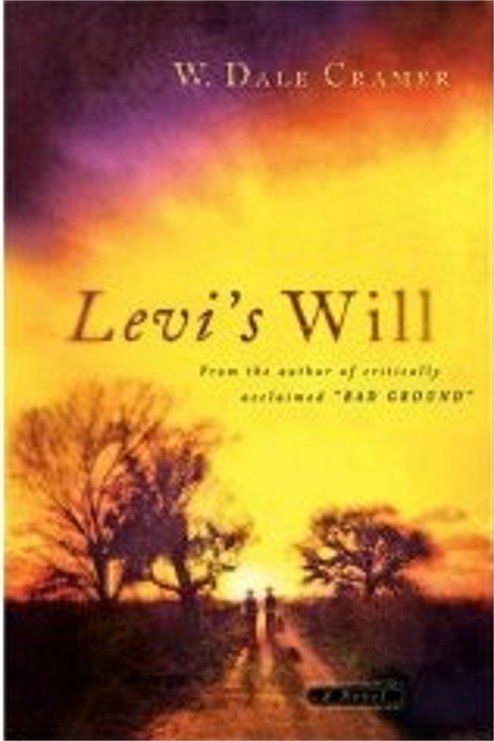
Spotlighting: Levi's Will by W. Dale Cramer


"We thought you were dead."

It wasn't exactly the welcome Will expected when he returned home eight years after running away. Didn't the prodigal son get a fatted calf? Wasn't there supposed to be a party thrown in his honor?

Instead, his father turns his back on him, walks away, and says, "Don't bring that in my house."

Will's life has fallen apart. Eight years of lies have finally caught up with him, and threaten to destroy everything he has worked for. Now he must face the mistakes of the past and seek forgiveness.


CONSTRUCTIVE COMMENTS

Set amongst the Old Order Amish, LEVI'S WILL is a superbly told story of generational sin, and the forgiveness and love one can only find through God. In a recent interview with Focus on Fiction, W. Dale Cramer reveals that this was a fictionalized story of his father's life.

Cramer opens the book in 1985, before taking us back in time to 1943 when Will makes his break from the Old Order Amish community, leaving behind a rigid father and pregnant girl.

Throughout the story, we are transported between present and past; following Will as he makes his way in life, struggling to overcome the judgmentally under which he grew up. Will leans on the one thing he understands, hard work, but fails to notice that he's making similar mistakes to those of his father. It soon becomes apparent that the sins of one generation carry over to the next.

Cramer drew me into Will's story, capturing my attention from start to finish. It's not often you find a book that has you genuinely caring for the characters, silently screaming at the unjustness of actions, and praying that God's love will soften hearts. LEVI'S WILL is one of those rare treasures.

Grab yourself a copy, settle into a comfy chair, and be transported into another world that will touch your heart and stay with you long after you turn the last page.

LESSONS LEARNED

Forgiveness is one of the hardest things we are called to do. The deeper the hurt, the harder it is to forgive.

But without forgiveness, we become tangled in rebellion and hatred. Resentment will alienate us from those around us. For me, it also brings bitterness.

Forgiveness doesn’t come naturally, and it isn’t always easy. But it is necessary.

LEVI’S WILL is a timeless lesson in one man’s search for forgiveness. A lesson we can all gain a measure of wisdom from.

To see more reviews, visit

Christian Fiction Reviewer

Focus on Fiction

Buy this book:

Sunday, October 09, 2005

Spotlighting: Dark Star - Confessions of a Rock Idol by Creston Mapes


Imagine if you will, a heavily tattooed rock star with long hair and a metal ring in his nose. Intoxicated on drugs and alcohol, he leads the frenzied crowd, refutes the existence of God, and indoctrinates the multitudes in the belief that there is no heaven or hell, but simply the Other Side.

You've pictured Everett Lester, lead singer of DeathStroke.

Would you spend your life praying for this man? Would you regularly take the time to send him gifts and write to him about God's love and Christ's redeeming grace?

Karen Bayliss does. Karen realizes the danger Everett places himself and thousands of his devoted fans in. But Karen isn't the only one trying to influence Everett's life.

Endora Crystal is also battling over his soul. As Everett's personal psychic, Endora leads him deeper into the occult and tells him everything he longs to hear. His fans love him; he is their leader, their savior. It is his destiny to lead them to the Other Side. The spiritual battle over Everett's soul comes to a climax when Endora is found dead and Everett is charged with first-degree murder.

CONSTRUCTIVE COMMENTS
~/~ Contains Spoilers ~/~

Written memoir style, Creston Mapes's debut novel pulls readers into a two-fold story. DARK STAR leads us through the present day courtroom battle, worthy of any John Grisham novel, while taking us back to recount Everett's life leading up to his trial.

Although DARK STAR was a riveting read from start to finish, there were a couple of minor stumbling blocks for me.

Everett's dialogue didn’t seem realistic of a drug addicted rocker. It seemed too polished. Don’t get me wrong. I didn’t expect Ozzy Osbourne language in a CBA novel, but a certain amount of grittiness is expected to make Everett a believable character.

A plot twist toward the end also struck me as a little unrealistic. Throughout the novel, Karen claims she is only interested in Everett’s salvation. She has no starry-eyed, romantic illusions. It came as a bit of a surprise then, when Everett and Karen meet for the first time and romantic fireworks ignite. At this point I felt I had been misled.

LESSONS LEARNED

Long after I closed the back cover, DARK STAR continued to invade my thoughts. Its characters remained in my mind, forcing me to reflect on the power of intercessory prayer and the spiritual battle continually fought over each of our souls. Included at the back of the book is a set of discussion questions that deepen your understanding of the book's themes of sin and redemption, and God's unconditional love.

It's not often you come across such a powerful book by a first time novelist. Creston Mapes is a rare find, an author to keep your eye on.

TO SEE MORE REVIEWS, VISIT
FOCUS ON FICTION

Buy this book:

Saturday, October 01, 2005

Spotlighting: The Martyr's Song by Ted Dekker


Do you ever feel left out? Rejected by the ‘beautiful’ people? Made to feel inadequate?


In the opening chapter of The Martyr’s Song, we meet Marci, a girl who knows first-hand what it means to feel rejected. With lowered eyes, she forces herself forward, through the crowd and toward the school building and her locker. The new skirt she had saved up for months to buy no longer gave her the courage she had hoped for. Instead she is met with taunting comments.

“Nice skirt.”
“You wearing that dress tonight?”

Nothing they could say could embarrass her any further. Of the entire eleventh grade, she was the only one not invited to tonight’s party.

“Please, she isn’t even going. And if she showed up in that, we’d have to lock her in the bathroom to keep the boys from throwing up.”

They skip away, leaving behind painful wounds and an empty school.

As she stands in the vacant school hallway, a woman approaches. “Come to my flower shop tomorrow, and I will make you beautiful,” the woman promises.

Marci is stung by the woman’s words, angered that even this stranger has the nerve to call her ‘ugly’. The next day Marci does go to the flower shop, not to let the woman ‘make her beautiful’ but to tell the woman exactly what she thinks of her, and her offer.

But when Marci arrives at the shop, she discovers that the woman, Eve, wasn’t talking about physical beauty, or even inner beauty.

Eve tells Marci that true beauty will come to her only when she embraces a long-forgotten story. Eve then tells Marci the story of Father Michael and thirteen-year-old Nadia, a child considered ugly with her coarse looks, blotchy freckles, and left leg two inches shorter than her right.

And so begins Dekker’s story within a story, a retelling of a tale contained in the opening pages of Ted Dekker’s When Heaven Weeps, the second title of his earlier Martyr’s Song series.

The story is set in war torn Bosnia, in the 1940s. A group of soldiers, lead by Commander Karadzic, comes across a small village, untouched by the combat that surrounds it. Karadzic is intent on restoring Serbia, purging anyone he doesn’t consider a good Serb, especially Franciscans who approved the murder of hundreds of thousands of Serbs by Yugoslavia’s Ustashe army.

Unable to understand why this church remains standing when all the others within a hundred kilometres have been burned to the ground, Karadzic becomes convinced it is a Franciscan church, protected by the Ustashe. When he finds Father Michael and the remaining villagers in the church courtyard celebrating Nadia’s birthday, he decides to put the villagers’ faith to the test, with deadly results.

As Karadzic’s inhuman game unfolds, readers glimpse life beyond the present through the eyes of Father Michael. The skin of this world peels away to reveal the world that awaits; a world full of laughter and a song that caresses the soul. A world where Nadia is beautiful.

By the time Eve finishes the story, Marci knows a secret that will change her life forever. She learns that in the eyes of heaven we are all beautiful, even her.

CONSTRUCTIVE COMMENTS

The Martyr’s Song, poignant in its first telling within When Heaven Weeps, is even more so in this novella which includes a CD of a song performed by Todd Agnew and co-written by Agnew and Dekker exclusively for this book. A list of discussion questions at the back of the book draws readers deeper into the book’s theme. Dekker invites us to search our souls and discover if we are in true anticipation of heaven, or simply enamored with our temporal life on earth.

This book struck my heart in a powerful way. Like Marci, I struggled with feelings of insignificance, and fought to fit in when considered the ‘outsider’. Unlike Marci, I didn’t have an Eve in my life to teach me what every child in this situation needs to learn.

I believe this book is a must read for any teenager who struggles with issues of self-worth, or who faces peer pressure to conform to today’s standards. Once more Dekker reaches out through story to expand our imagination and teach a timeless message. Once more I have been changed as a result.

Featured by World Vision during its 30 Hour Famine campaign, THE MARTYR’S SONG is set to reach the youth of today with a powerful message to love all that cross our path.

FOR MORE REVIEWS, VISIT http://www.focusonfiction.net

Buy this book:


Thursday, September 15, 2005

Welcome


Welcome to Illuminating Fiction, where soul-stirring stories are spotlighted.

If you are looking for a soul touching story that will entertain and enlighten, then you have found the right place.

From time to time, I will post reviews of novels that have touched my heart and retaught me timeless truths.

Feel free to sign up for my notication list.

Thank you for visiting!